

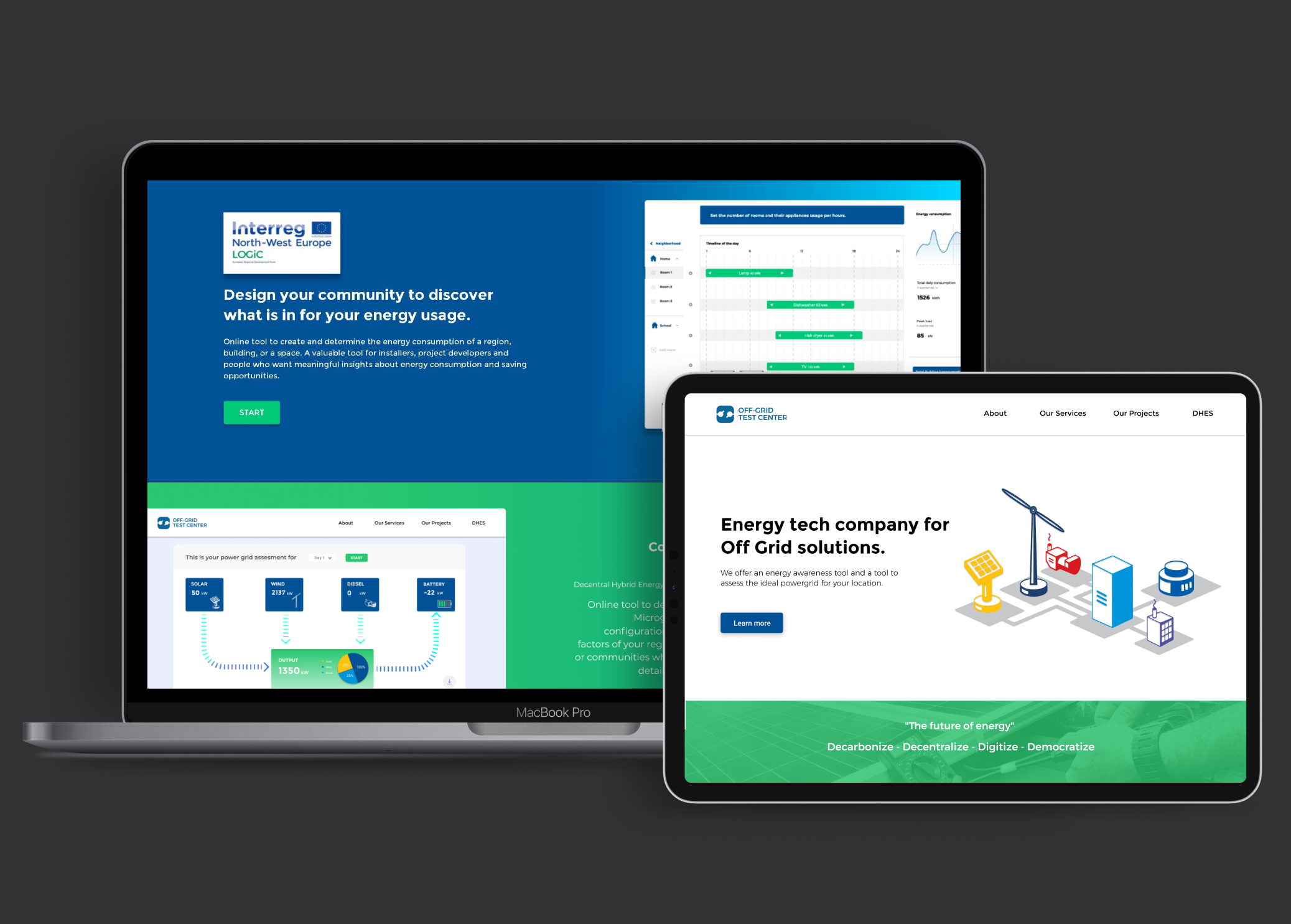
Off Grid Test Center is an Energy Tech company developing solutions for off-grid locations. They use AI and data for smart integration and management of renewable sources.
Off Grid Test Center started as a group of dedicated engineers with a fantastic model they created to launch a new idea of energy-usage. My first impression as a designer was that while the back end seemed just fine, the front end of the company needed a strong refresh. Most importantly the first steps were focused on clarifying and organizing the information about the company, their vision, their mission, the target audience and ultimately properly pitching their idea on the web.
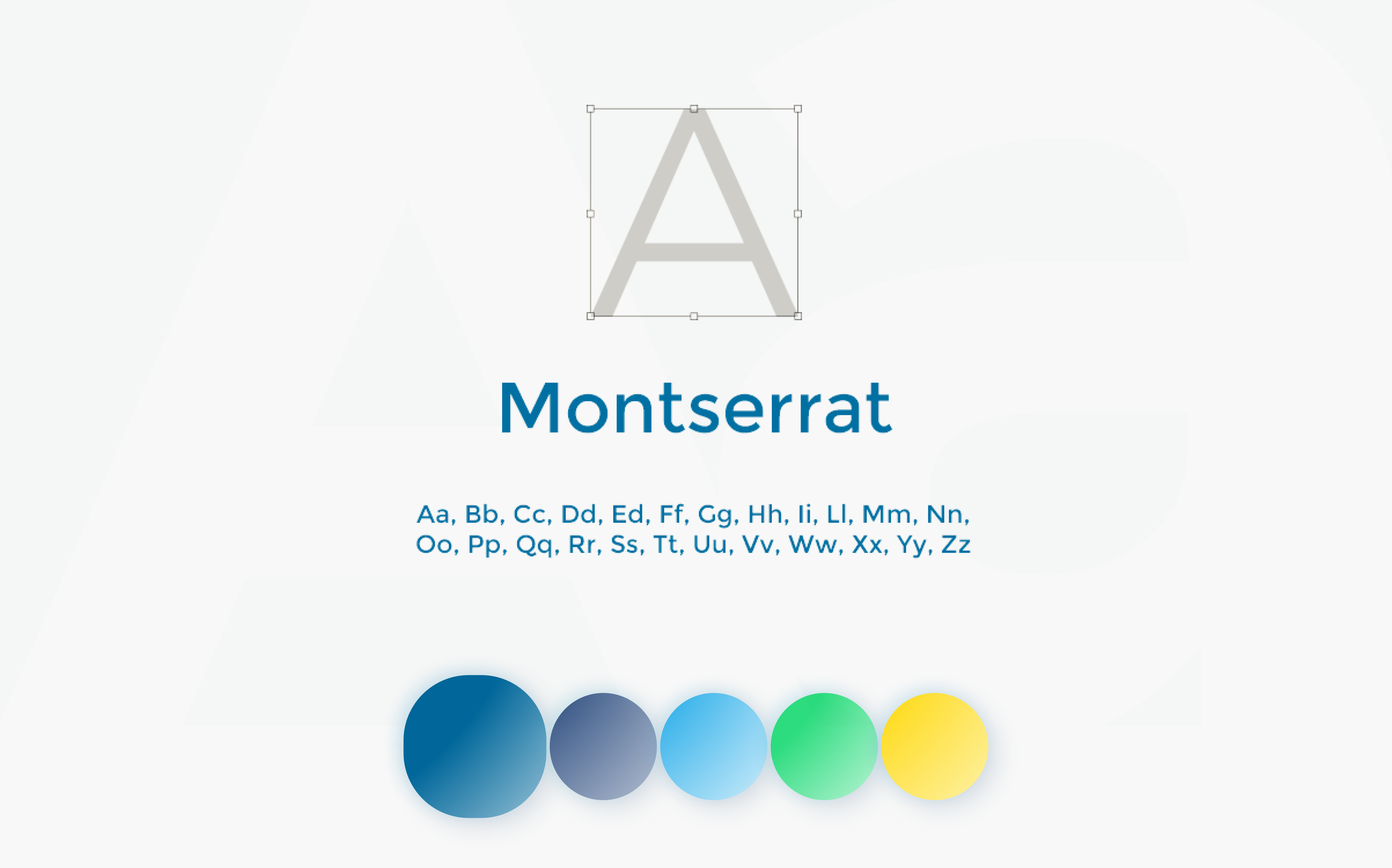
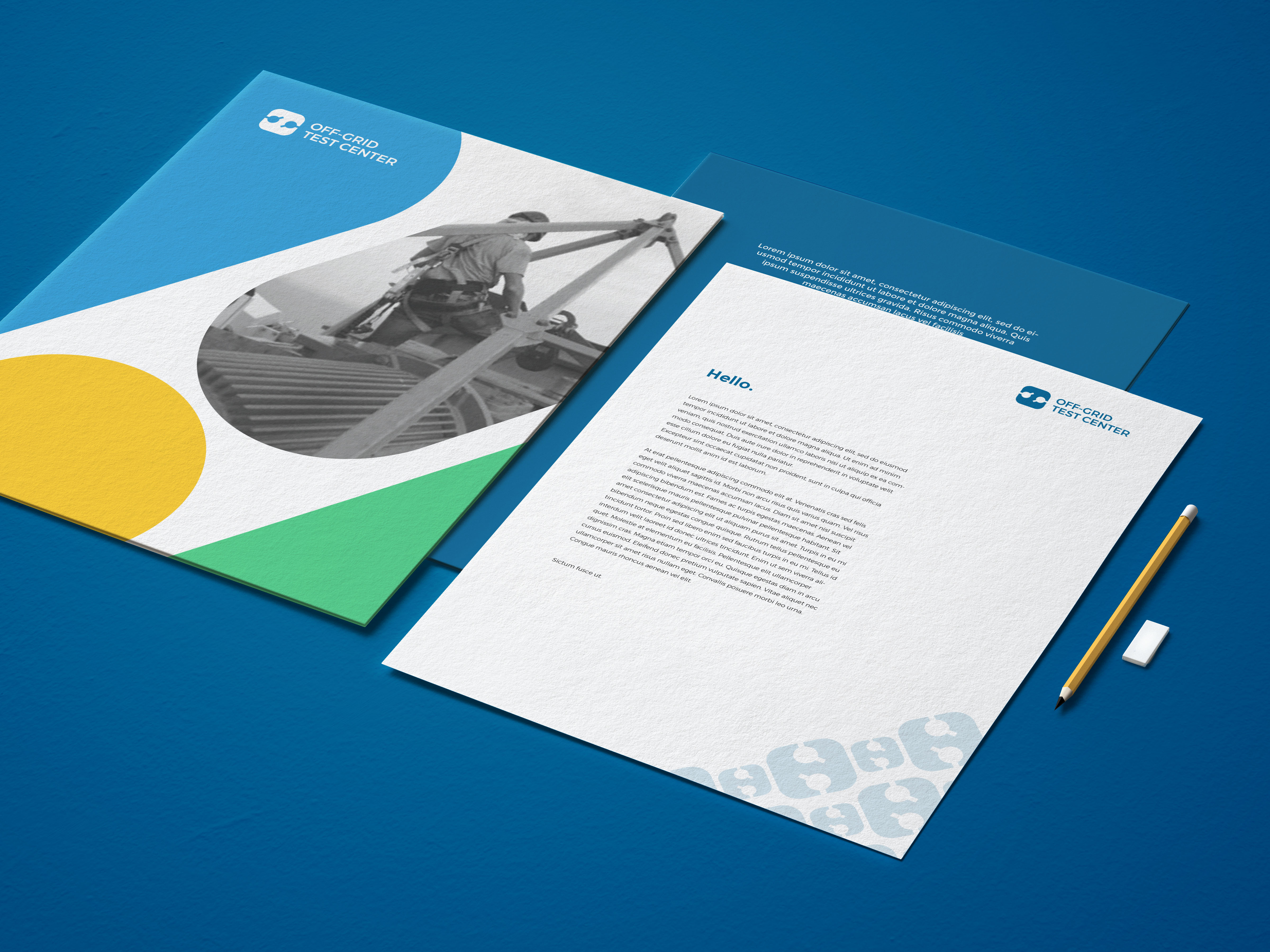
We spoke to customers and employees to define the user persona and we did a company placement to express their values and goals. From there I could set the basis for a modern and yet professional corporate identity, ready to be shared at conferences and get-together with investors.
Off Grid Test Center started as a group of dedicated engineers with a fantastic model they created to launch a new idea of energy-usage. My first impression as a designer was that while the back end seemed just fine, the front end of the company needed a strong refresh. Most importantly the first steps were focused on clarifying and organizing the information about the company, their vision, their mission, the target audience and ultimately properly pitching their idea on the web.
We spoke to customers and employees to define the user persona and we did a company placement to express their values and goals. From there I could set the basis for a modern and yet professional corporate identity, ready to be shared at conferences and get-together with investors.
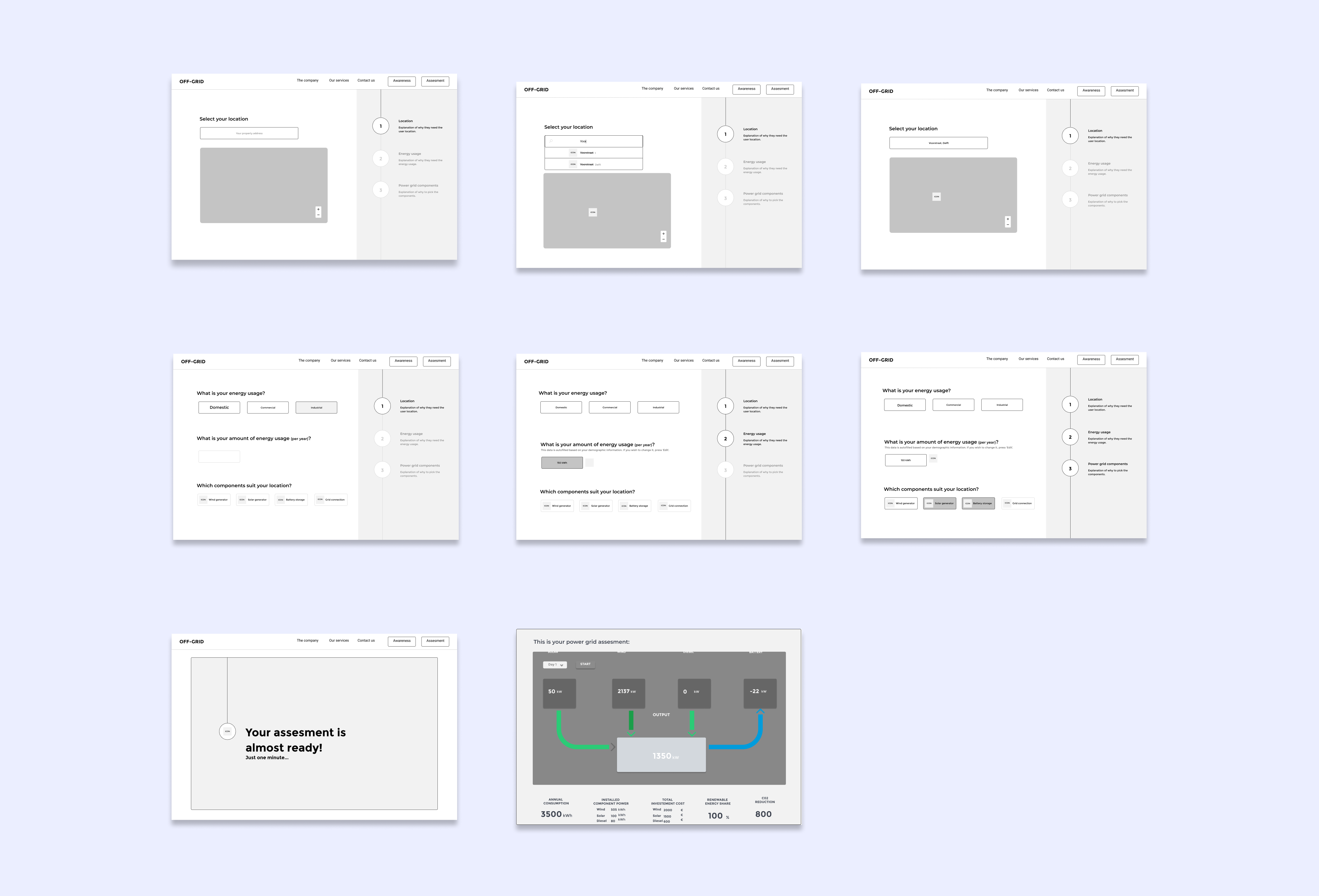
Goal:
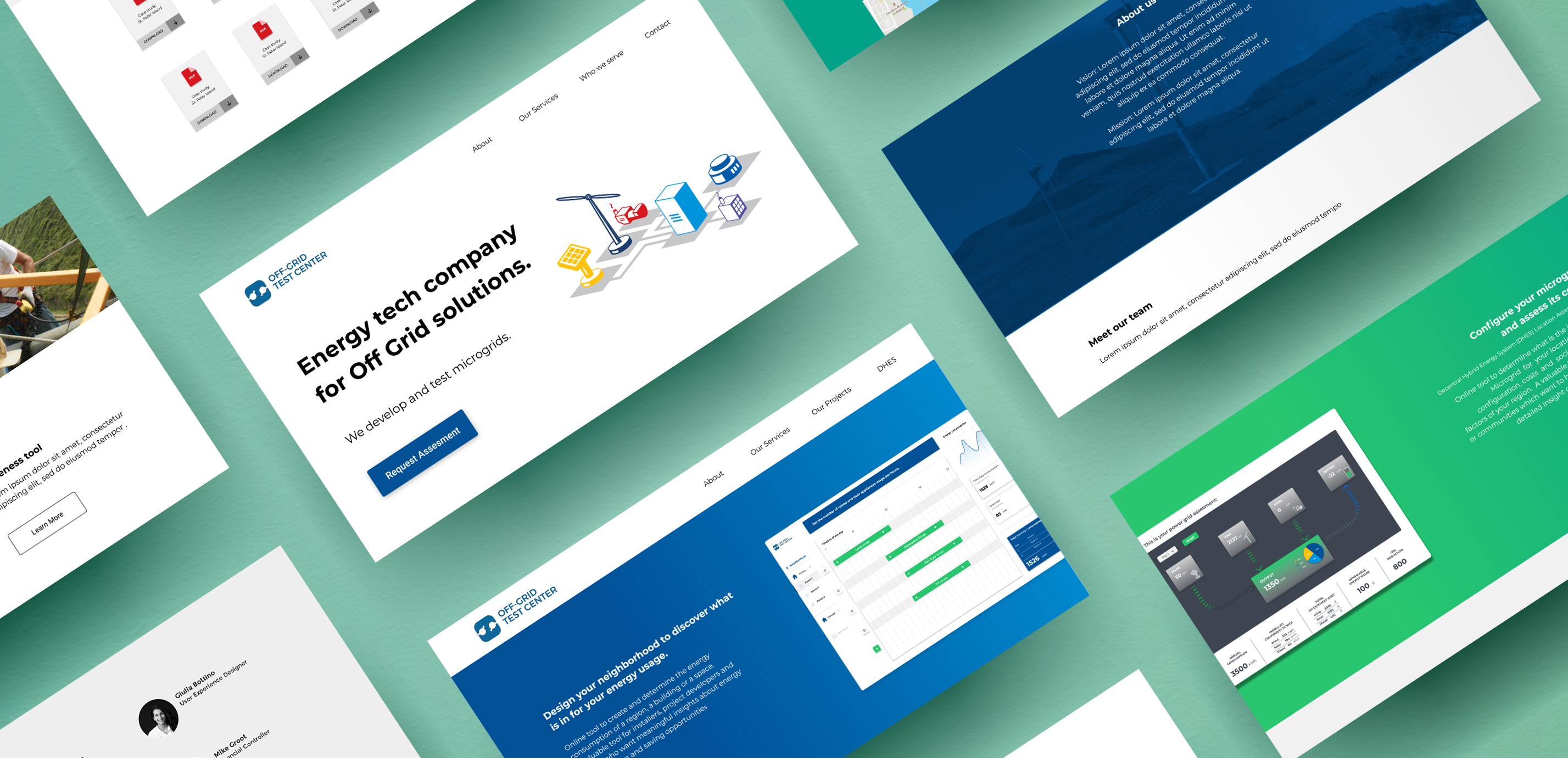
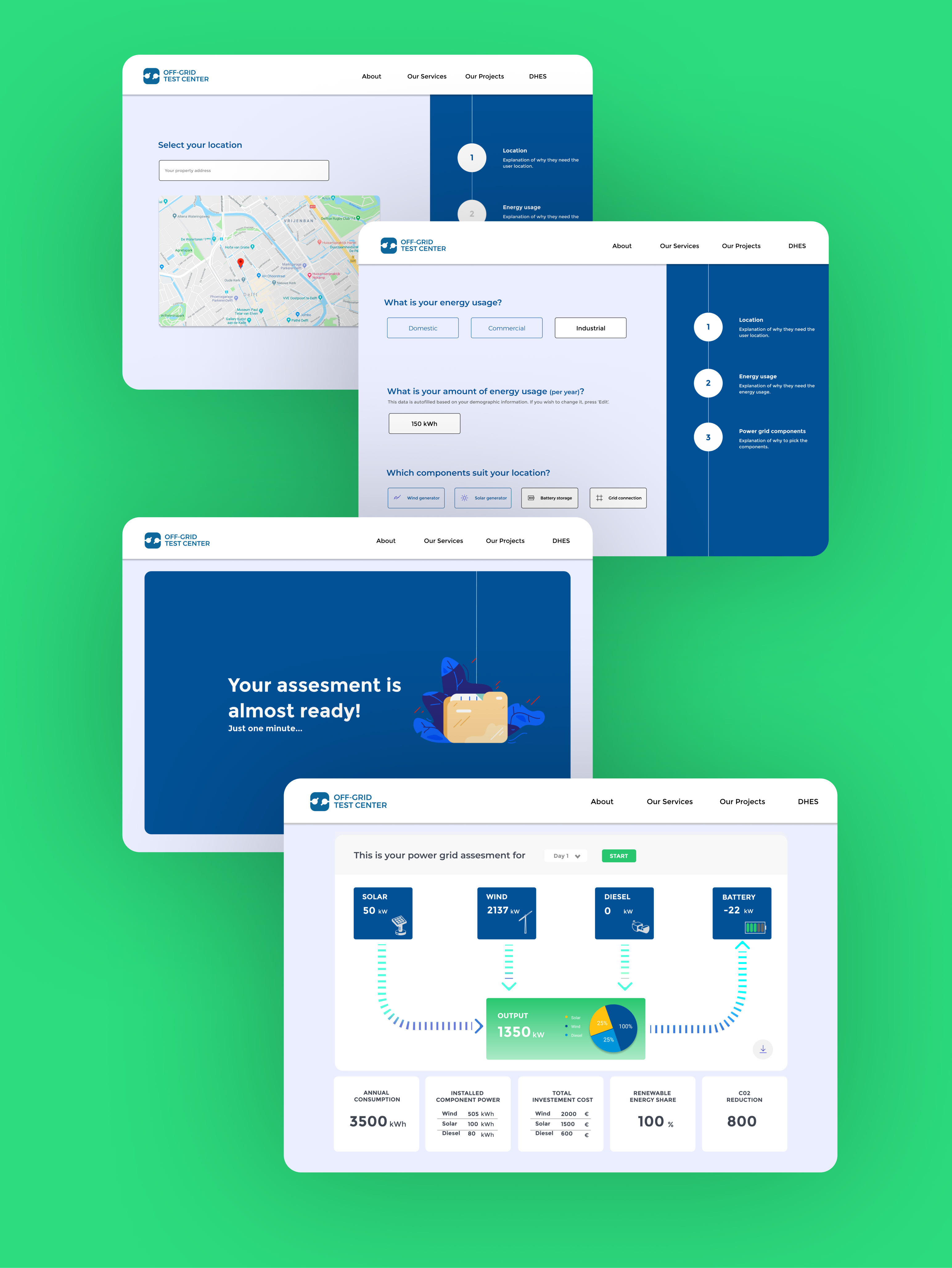
Configure your microgrid and assess its costs. Users discover what is the ideal microgrid for their location in terms of: configuration, costs and social demographic factors of your region. A valuable tool for engineers or communities which want to have meaningful and detailed insight of a microgrid project.
Main objectives:
We determined that the main objective was to create a straight forward tool, where complex technicalities and specs could be easily visualized and understood by anyone.
A well structured navigation together with personalized informative data that provide valuable insights into the topic.
Card sorting sessions and internal feedbacks were some of the methods we used to build our information architecture and user flow.
Goal:
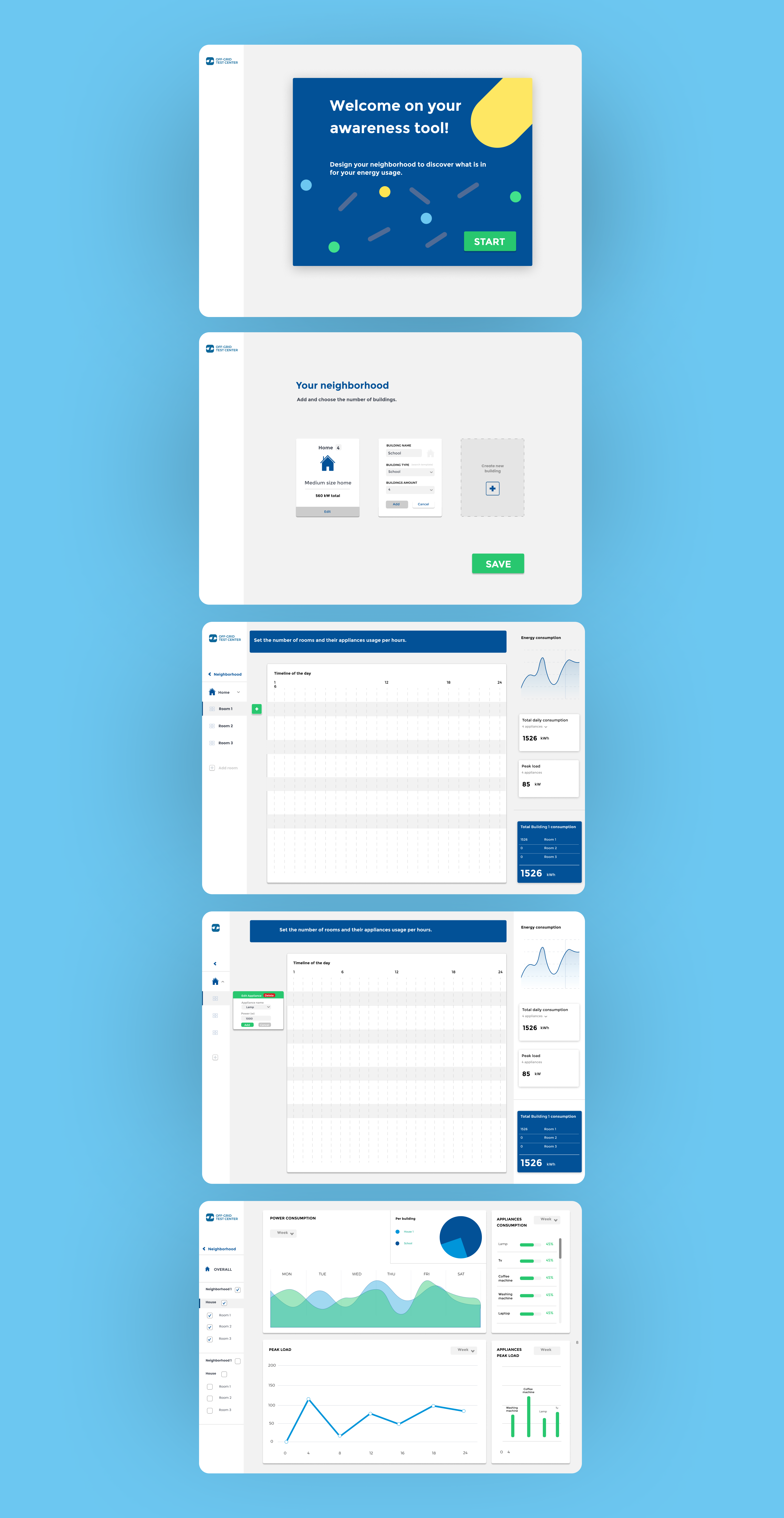
Online tool to create and determine the energy consumption of a region, building, or a space. A valuable tool for installers, project developers and people who want meaningful insights about energy consumption and saving opportunities.
Main objectives:
As for the previous tool, a well organized structure with informative data were our primary objectives.
The amount of information we had to handle was immense and as a start up we lacked in time. Therefore, when it came to the use and visualization of global-level data I decided to go for the development of a dashboard. In this way we could create stepping stones in our model structure, with a clear path and hierarchy.
- Once on the platform, the user has to create its community or single household
- By adding buildings or rooms to the community/household the user can then move to the single devices he/her uses daily.
- A clear visualization of data helps guiding the user through the different setting requirements. Lastly, comes the final outcome of the overall community energy usage.
Needless to say, this project has only just begun. Much has to be improved in terms of iteration. In less than a couple of months the team was able to build a good first draft of the tools and present it to the European Commission.
Here is a quick video of the awareness tool explained by one of my teammates.
It displays one of the first versions of the tool but it gives a good idea of our model.